Most bat-buying in Pakistan goes wrong in the same way: someone spends Rs. 2,500 on a bat built for a taped tennis ball, then takes it to a hard-ball net and cracks the toe in a fortnight. The wood was not the problem. The ball was. So before any price comparison, settle which ball you actually face on a Sunday morning — everything below follows from that.
What you pay for a cricket bat in Pakistan
Across Pakistani sports retailers, tape ball bats generally start around Rs. 1,100 for the most basic blades and run to about Rs. 5,000 for well-finished branded coconut and Kashmir willow models, with specialist tournament bats going past Rs. 9,000. Hard-ball bats in Kashmir willow overlap the top of that range; English willow starts well above it. The four bats we stock sit in the busiest part of the market:
- NK Cricket Bat — Rs. 1,500. Entry-level tape ball blade for daily street cricket.
- Cricket Bat Rox Panther — Rs. 1,799. Tennis and tape ball bat with a stickered face and cane handle.
- SS Hardball Cricket Bat, Kashmiri Willow — Rs. 1,800. The only hard-ball bat of the four.
- JD FMC Special Edition Coconut Cricket Bat — Rs. 2,500. Light coconut wood built for power hitting at a taped ball.
Prices above are what these bats sell for at AR Book Mart at the time of writing. A bat priced far below the Rs. 1,100 floor is usually thin, poorly seasoned, or fitted with a plain wooden handle instead of cane — and the handle is where cheap bats fail first.
Pick the ball before you pick the bat
Tape ball cricket is played with a tennis ball wrapped in electrical tape. The ball is light, it skids rather than seams, and it never arrives with the force of a leather season ball. The expensive part of a proper cricket bat — pressed willow that rebounds a hard ball — is wasted on it. That is the whole reason coconut and soft-ball bats exist at these prices.
- Coconut wood — lightest of the lot, quickest through the ball, priced for regular street use. Tape ball and tennis ball only.
- Kashmir willow soft-ball bats — heavier, better balanced, a more solid middle. Worth it for organised tape ball leagues and night tournaments where the ball is taped hard.
- Kashmir willow hard-ball bats — pressed to absorb a leather season ball. The right choice for club nets and academy cricket, and overkill for the street.
- Plastic bats — young children, indoors, soft rubber ball. They will not survive a taped tennis ball on concrete.
Match the bat to the ball you actually play with, not the one you plan to play with someday. A coconut blade against a cork or season ball goes at the toe or the edges, usually within a few overs, and no warranty covers it.
Weight is the whole argument in tape ball
Retail listings put most coconut tape ball bats in the 800–850 gram range. Kashmir willow tape ball bats are commonly listed at 1,180–1,240 grams. That gap of roughly 350 grams — close to a third of the bat — is what you are choosing between.
In tape ball cricket, bat speed does the work that mass does in hard-ball cricket. A light blade lets you swing late at a full toss on a narrow street, clear the front leg on a slog, and still control the bat in the last over when your arms are gone. A heavier bat does not send a taped tennis ball further; it just arrives at the ball slower.
The pick-up test takes ten seconds: hold the bat in your top hand only, lift it to shoulder height, and play three shadow shots. If the bat starts pulling your wrist down or your shots drift towards leg side, it is too heavy for you — whatever the label says.
Coconut wood tape ball bat for power hitting
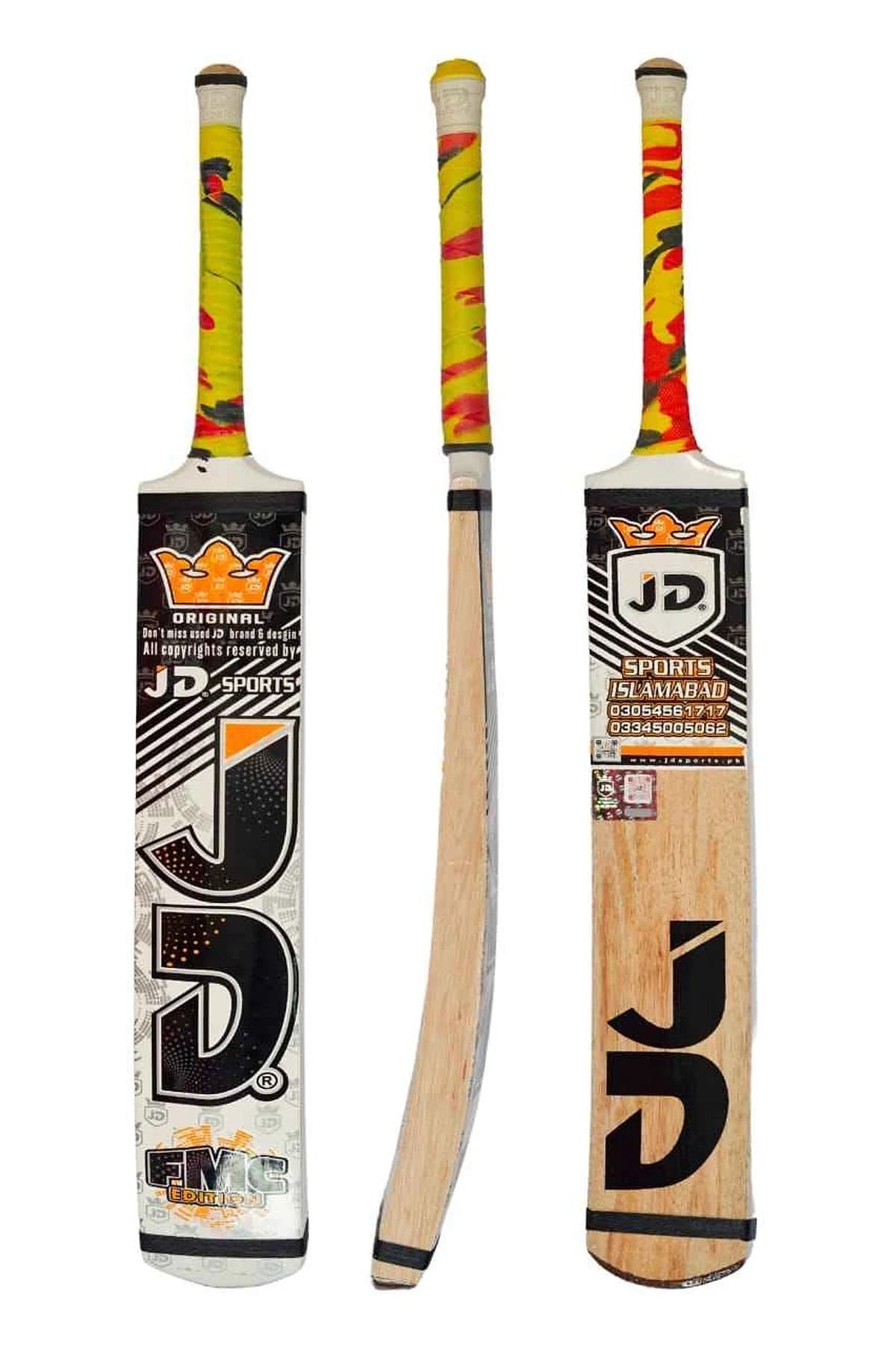
Look at the back of this bat: bare coconut wood, no polish, no oiling, nothing but a printed logo. That is the entire pitch. It is not trying to be a willow bat. It is a light blade with a full cane handle, built to swing fast at a taped tennis ball, and in Pakistan that covers most of the cricket actually being played.
The side view is the one worth studying. The spine is thick and the blade curves into the toe, which puts the middle high on the bat — exactly where a tape ball tends to hit. Coconut is cut from mature palm rather than pressed willow, so it costs less and weighs less, and it asks nothing of you before the first game: no knocking in, no linseed oil.
- Best for: power hitting in tape ball and tennis ball cricket
- Handle: full cane, wrapped grip
- Not for: hard ball, cork ball, or anything heavier
- Price: Rs. 2,500
Kashmir willow hard ball bat under Rs. 2,000
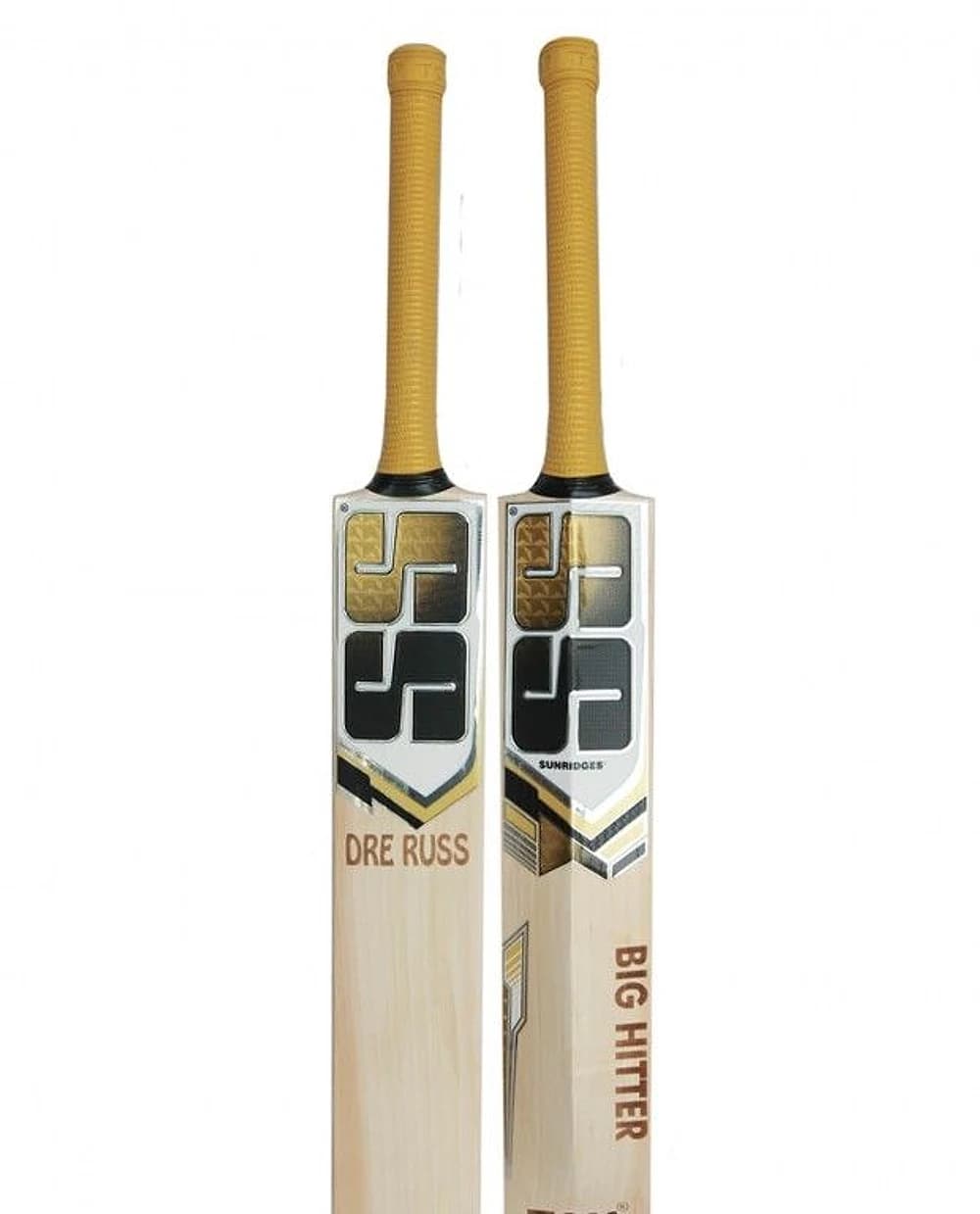
This is the only bat of the four you can take into a hard-ball net. Kashmir willow is pressed and seasoned to take a leather ball, which is why the blade looks and feels different from the coconut bat above: pale, close-grained, noticeably denser in the hand. At Rs. 1,800 it sits at the bottom of the hard-ball range, which makes it a sensible first proper bat for a school or club player rather than a bat you take to a tournament final.
Willow does come with homework. Unlike coconut, a hard-ball bat wants knocking in before it faces a season ball — an hour or two with an old ball or a bat mallet, working the edges and the toe until the surface compresses. Skip it and the first good delivery leaves a dent that turns into a crack.
- Best for: hard-ball nets, school and club cricket
- Wood: Kashmir willow, full size
- Prep: knock in before first use; a toe guard is cheap insurance
- Price: Rs. 1,800
Tennis ball cricket bat for street and gully cricket
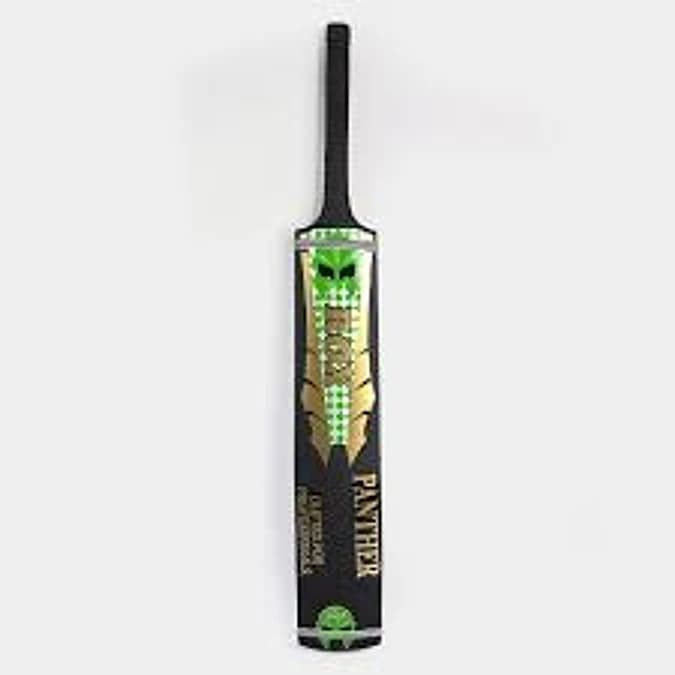
The Rox Panther is the middle option: a stickered soft-ball blade for tennis ball and tape ball cricket, at Rs. 1,799. Bats in this class are the workhorses of gully cricket — full size, cane handle, a face sealed under printed film so the wood does not scuff every time the ball finds the edge on concrete.
The sticker is the part people misread. It is cosmetic, and it hides the grain, so you cannot judge the wood by looking at the front. Judge it by the handle instead: hold the blade, twist the handle, and feel for movement or a click where the two meet. That joint is where a street bat dies, long before the blade gives out.
- Best for: tennis ball and tape ball, street and gully cricket
- Face: sealed under printed film — check the handle joint, not the sticker
- Not for: hard ball
- Price: Rs. 1,799
Budget tape ball bat under Rs. 1,500
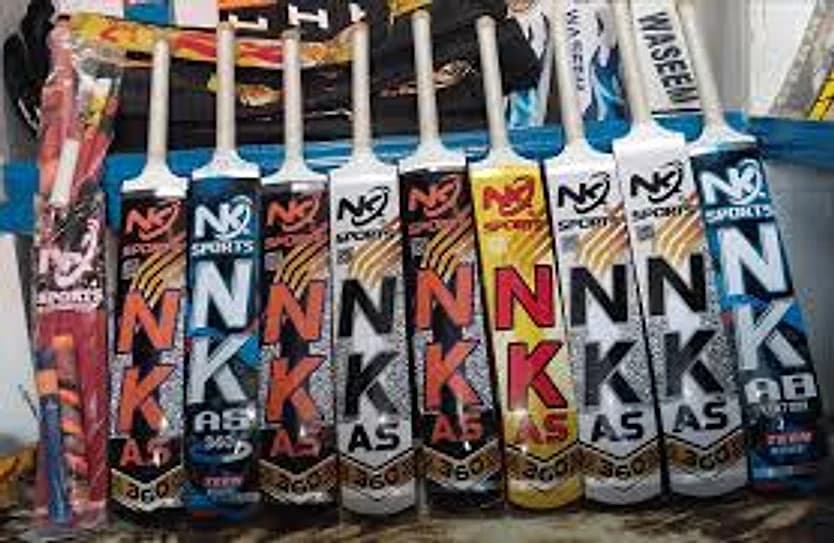
At Rs. 1,500 the NK is the bat you buy knowing it will get left out in the sun, used as a stump, and lent to whoever turns up. That is not a criticism — it is the job. For a mohalla side that plays three evenings a week and loses a bat every few months to concrete, spending Rs. 2,500 is worse value than spending Rs. 1,500 twice.
What you give up at this price is finish and consistency: the pick-up varies more from bat to bat, and the toe is thinner. Tape the toe and the edges before the first game and you close most of that gap for the price of a roll of electrical tape.
- Best for: everyday street cricket on a budget, and spare bats for a team kit
- Prep: tape the toe and edges before the first game
- Not for: hard ball
- Price: Rs. 1,500
How to read a cricket bat before you buy
Whichever of the four you are looking at, the inspection is the same, and it takes under a minute in hand.
- Handle — a full cane handle wrapped in a rubber grip, not a plain wooden stick. Cane absorbs shock and stops the sting on a mistimed pull shot.
- Handle joint — hold the blade and twist the handle. Any movement or clicking where the two meet means it will come loose within a season.
- Side profile — the edge view shows the spine and how the wood curves into the toe. A thick spine with a slight bow puts the middle where the ball actually hits.
- Face — stickers are cosmetic. Where the wood is bare, look for straight grain, no cracks running up from the toe, and no dark patches of filler.
- Toe — the most common failure point on any street bat. Clean and square, with no chipping, on day one.
- Authenticity sticker — branded bats from Pakistani makers usually carry a holographic sticker. It is not a quality guarantee, but its absence on a bat sold as branded is worth a question.
Getting the bat size right
Most tape ball bats are sold in full adult size only, so the real question is who is using it. Size a bat by height, not age. Stand it upright against the player's leg: the top of the handle should sit around the top of the thigh. If it reaches the hip, the player is dragging the bat through every shot and will build a bottom-hand-heavy swing that is hard to unlearn.
- Under about 150 cm — a junior or size 6 bat, not a full size
- Roughly 150–163 cm — a Harrow-size bat fits better than a full size
- About 168 cm and above — full-size short handle, which is what most tape ball bats are
Care: making a bat last a full season
Coconut and soft-ball bats need no knocking in and no linseed oil — both are willow rituals and neither helps. What they need is protection from the two things that actually kill street bats: concrete, and the wrong ball. A Kashmir willow hard-ball bat is the exception and does want proper preparation.
- Tape the toe and the edges of a tape ball bat before the first game. A few rupees of electrical tape is the highest-return thing you can do to a new bat.
- Knock in a willow hard-ball bat before it faces a season ball, and fit a toe guard.
- Never use a coconut or soft-ball bat against a hard ball, a cork ball, or a stone.
- Do not tap the pitch or knock stones off the concrete with it. The toe takes the damage every time.
- Store it flat and dry, out of direct sun. A bat left in a parked car through a Karachi summer is a bat you have already replaced.
- Replace the rubber grip when it goes shiny. A slipping grip costs you control long before the blade gives out.
Before you pay, check these five things
- The bat is sold for the ball you actually play with
- The handle is cane, and the joint has no play in it
- The bat still feels light in the top hand after three shadow shots
- The toe is clean and square, with no chips or filler
- Where the wood is bare, the grain runs straight with no cracks
All four bats ship from AR Book Mart with Cash on Delivery nationwide, 2–7 working days across Karachi and 50+ cities in Pakistan, and a 7-day return window if the bat is not what you expected.